
Plastic Reaches the Deep Pacific

A clean-looking sea surface cannot tell us everything about what lies beneath it.
Evidence from Ecuador's continental margin
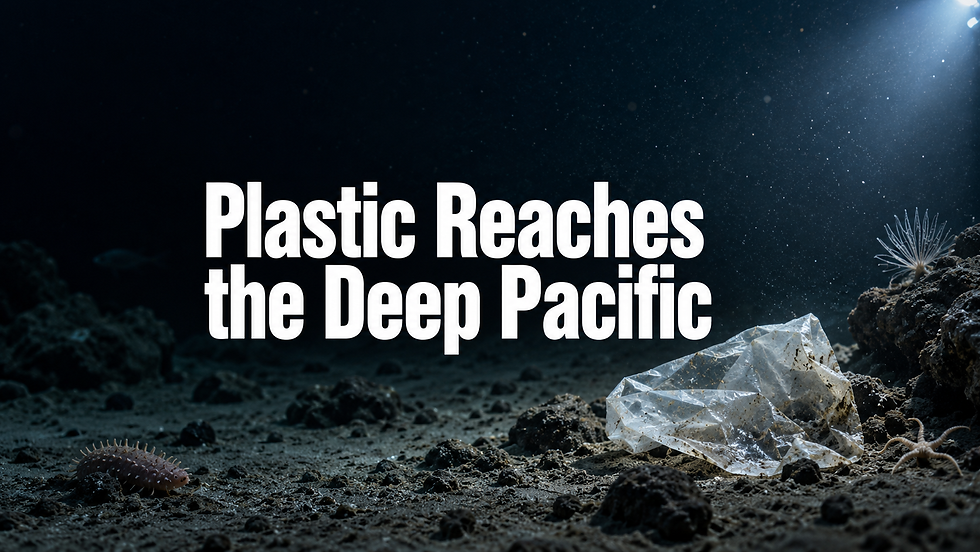
A new study combines deep-sea observations off Ecuador with a separate coastal monitoring series near Salinas. During a February 2024 research campaign, the NAUTILE submersible recorded plastic debris at depths around 3,900 metres. Bags, packaging and other objects were documented during dives originally intended for geological research.
The coastal component tracked debris in a fixed beach area during 2019-2025. These records do not trace individual objects from that beach into deep water.
Presence is clearer than the whole picture
The underwater records establish that debris was present at the observed locations. Because sightings were opportunistic and viewing conditions varied, they do not provide a complete inventory of the Ecuadorian margin. Proposed transport pathways remain interpretations to investigate. Polymer assignments were probable identifications, not comprehensive chemical analyses.
The coastal time series also needs care: changing sampling effort and occasional heavy objects can strongly influence annual totals. The study concerns visible debris; it is not a comprehensive measurement of microplastics throughout the water column.
A practical lesson for Golfo Dulce
For SaveGolfoDulce, the editorial recommendation is to make local litter observations comparable. A beach programme could record the same area repeatedly, document time since the previous collection, and report item counts alongside mass. Unusual objects should be recorded separately so readers can understand a sudden jump.
Photographs, location records and consistent categories would help build an archive that others can examine. Reports should also explain whether a survey searched the surface, shoreline or seabed; those observations answer different questions.
This Ecuadorian research does not measure conditions in Golfo Dulce or identify a local polluter. Its value here is to encourage prevention and monitoring that look beyond the most visible part of the coast.


Comments