
What Can Humpback Whales Hear?

A new research tool could help answer a surprisingly difficult question: what sounds can a free-swimming humpback whale actually detect?
We can record whale songs. Understanding what a whale hears is a different challenge.
A promising test in Hawaiʻi
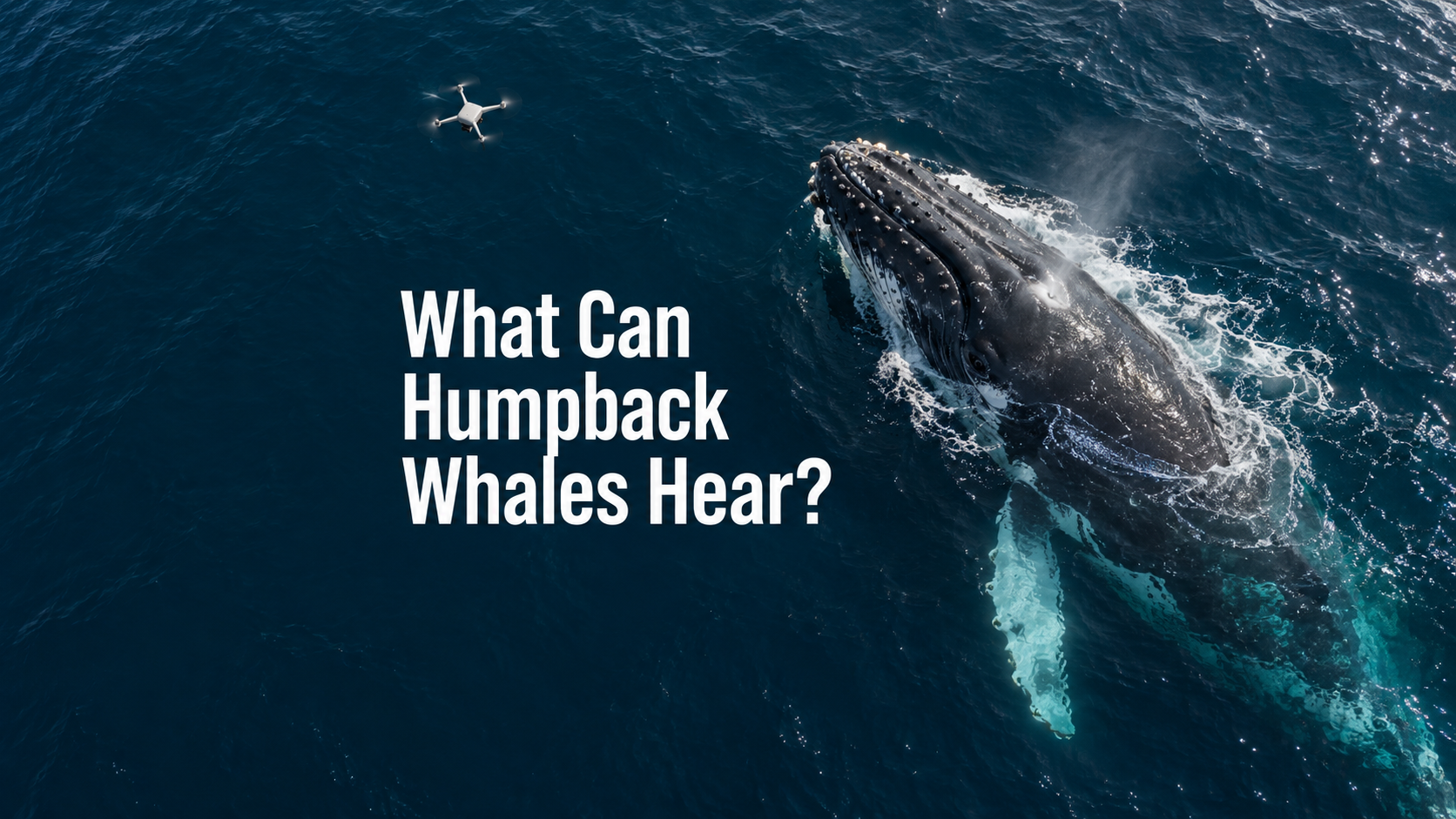
NOAA’s Hawaiian Islands Humpback Whale National Marine Sanctuary, Ocean Alliance and University of Southern Denmark researcher Adam Smith are testing a suction-cup tag containing electrodes. A drone places it near the whale’s blowhole, where researchers hope to detect tiny signals associated with hearing.
NOAA reports successful tag deployments and heart-rate measurements. But the team does not yet have confirmed auditory brainstem response results from humpbacks. This is an early research advance, not a completed hearing test.
The aim is to compare physiological signals with controlled sounds and combine them with observations of movement. Together, these measures could help distinguish detection of sound from a visible behavioural response.
What could this mean for Golfo Dulce?
For SaveGolfoDulce, the practical question is how future monitoring could connect underwater sound with the way whales use a place. A sighting log and an acoustic recording answer different questions; putting them together could make both more informative.
A useful local study would document recording locations and times, equipment settings, vessel activity, weather and observed behaviour. It would also explain what it cannot detect. A whale that does not visibly react is not automatically unaffected, and a noise recording alone cannot diagnose harm.
Evidence before local conclusions
The NOAA project is in Hawaiʻi. It does not establish hearing thresholds, noise injuries or safe operating distances for whales in Golfo Dulce. Drone tagging is specialised, permitted research, not an activity for visitors to imitate.
The editorial priority is therefore straightforward: follow the results, support careful local observation and avoid turning a promising tool into a claim that the science has already settled.
Source
Source checked: 28 September 2026. Hero image: AI-generated editorial illustration; not a photograph of the reported research.


Comments